



KEY FINDINGS AT A GLANCE
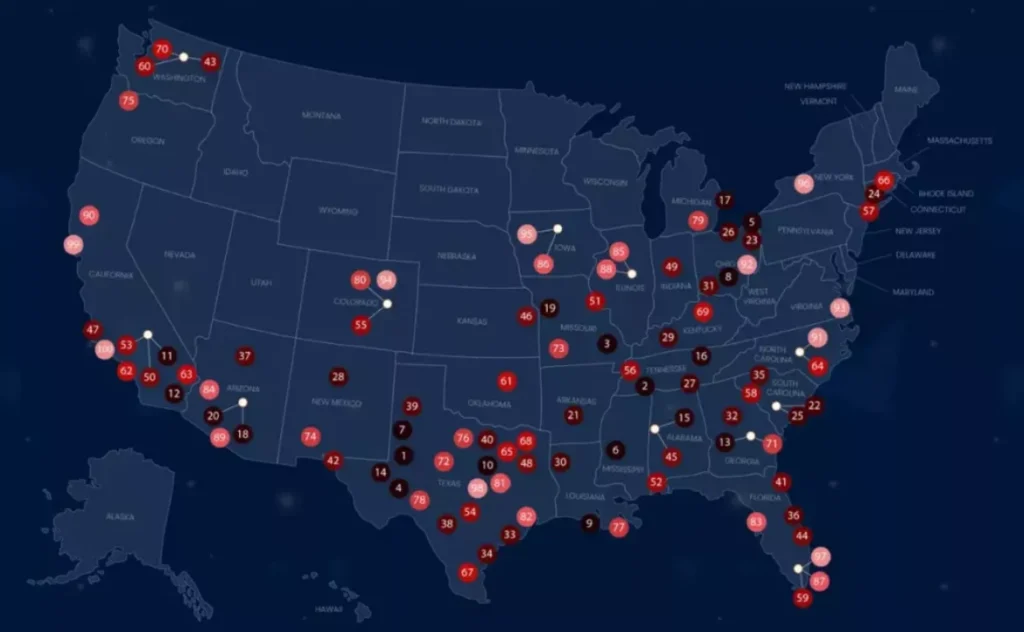
- 22 Texas cities appear in the Top 100 — more than any other state
- 4 of the Top 10 worst cities nationally are in Texas
- Odessa leads the nation at 60.1 drunk driving deaths per 100,000 residents
- Texas cities account for 32% of all Top 100 drunk driving fatalities
- In Odessa, Beaumont, Lubbock, Midland, and Tyler, 70–80% of fatal BAC 0.08+ crashes involve drivers at 0.15+
- Nationally, one person is killed by a drunk driver every 42 minutes
New federal crash data from 2019 through 2023 shows that fatal drunk driving is not spread evenly across the country. Some cities carry a much heavier share of the risk, and Texas communities appear again and again in the numbers.
Using the National Highway Traffic Safety Administration’s Fatality Analysis Reporting System (FARS), researchers reviewed the 300 largest U.S. cities and ranked the 100 with the highest per-capita rate of drivers in fatal crashes with a blood alcohol concentration (BAC) of 0.08 or higher. A sobering twenty-two of those Top 100 cities are in Texas. They range from smaller oil and highway corridor communities such as Odessa and Beaumont to large metro areas including Dallas, Houston, San Antonio, Fort Worth, and Arlington.
Across the 100 high-risk cities, there were 8,960 drivers involved in fatal crashes with a BAC of 0.08 or higher and 5,850 drivers with a BAC of 0.15 or higher during the five-year period. Put differently, about two out of every three alcohol-impaired fatal-crash drivers in these cities were at nearly twice the legal limit.
Small Cities, Big Rates
To put large metros and smaller cities on equal footing, the rankings are based on rates rather than raw counts. Researchers calculated the number of drivers in alcohol-impaired fatal crashes as a rate per 100,000 residents using 2023 population estimates.
That’s important because once the data are expressed as rates, a clear pattern appears. Many of the most dangerous places for drunk driving are not the nation’s biggest metro areas, but small and mid-sized cities where a few dozen deaths translate into very high, very real per-capita risk.
In this dataset, some of the highest per-capita rates belong to cities with relatively small populations that recorded repeated fatal crashes tied to alcohol. Cities such as Odessa and Beaumont in Texas, along with other oil and highway corridor communities, rank near the top. That means a city that experiences roughly 40 drunk driving deaths over several years can end up with a much higher rate than a much larger metro with more fatalities spread across millions of residents.
Across the Top 100 cities, the average rate is about 24.3 alcohol-impaired fatal-crash drivers per 100,000 residents over the five-year period. That is considerably higher than national averages. Nationwide, alcohol-impaired crashes account for roughly one third of all U.S. traffic deaths, with more than 13,500 people killed in 2022 alone, according to federal data.
Alcohol-impaired traffic deaths have also risen markedly in recent years. From 2019 to 2022, drunk driving deaths nationwide increased by roughly one third, even as travel patterns changed during and after the COVID-19 pandemic. Early figures for 2023 show some improvement, but the numbers still reflect nearly one person killed every 42 minutes from alcohol-impaired driving.
Texas Dominates the High-Risk List
Within the Top 100 cities, Texas is a stark stand-out.
Of the 100 cities with the highest per-capita rates of alcohol-impaired fatal crashes, 22 are in Texas. Those Texas cities account for about 31 percent of the total population in the study group, but an even larger share of the alcohol-impaired fatal-crash drivers.
From 2019 through 2023, the Texas cities in the Top 100:
- Account for 2,868 of the 8,960 drivers in fatal crashes with BAC of 0.08 or higher, about 32 percent of the total
- Account for 1,950 of the 5,850 drivers in fatal crashes with BAC of 0.15 or higher, about 33 percent of the most severe cases
Taken together, Texas cities generate more than their share of alcohol-impaired fatal-crash drivers and an even bigger share of crashes involving extremely high BAC levels.
Smaller and Mid-Sized Texas Communities
Some of the sharpest rate figures are found in smaller and mid-sized Texas communities:
- Odessa: around 60.1 drivers in alcohol-impaired fatal crashes per 100,000 residents, more than double the Top 100 average of 24.3
- Beaumont: around 40.0 per 100,000
- Lubbock: around 38.4 per 100,000
- Midland: around 34.4 per 100,000
These communities combine heavy traffic on long highway corridors, late-night driving, and, in some cases, energy-sector travel patterns that keep more vehicles on the road during overnight hours.
Smaller and mid-sized Texas cities show similar patterns across the state. Cities such as Tyler, Abilene, Irving, Mesquite, Waco, Conroe, Killeen, Richardson, Edinburg, and Arlington generally fall in the 18 to 24 per 100,000 range. Many of these communities show a high share of extremely impaired drivers. In places like Midland, Odessa, Edinburg, Lubbock, and Beaumont, roughly 70 to 80 percent of drivers in BAC 0.08-plus fatal crashes had BAC levels of 0.15 or higher.
Major Texas Metros
Larger Texas metros face a different profile of risk. Their per-capita rates are lower than the most extreme outliers but still elevated, and their large populations mean the absolute number of affected drivers is very high:
- Dallas: about 36.1 drivers in alcohol-impaired fatal crashes per 100,000 residents, with around 476 drivers in BAC 0.08-plus fatal crashes
- Houston: about 26.8 per 100,000, with roughly 630 drivers
- San Antonio: about 26.2 per 100,000, with roughly 393 drivers
- Fort Worth: about 25.9 per 100,000, with about 255 drivers
- El Paso: about 25.4 per 100,000
- Austin: about 22.6 per 100,000
Across all Texas cities in the Top 100, the average rate is about 26.9 alcohol-impaired fatal-crash drivers per 100,000 residents, slightly higher than the overall Top 100 average of 24.3. Even among cities that are already high risk, Texas tends to sit near the top.
Big Cities Versus Small Cities
The rankings highlight an important contrast between smaller high-rate cities and larger metros.
A smaller city might see only a few dozen drunk driving deaths over several years and still post a rate two or three times higher than the Top 100 average. A much larger metro may rank lower on a per-capita basis while experiencing hundreds of alcohol-impaired fatal-crash drivers.
For the families affected, the impact of a single crash is the same regardless of how many other deaths occur in the region. What the numbers reveal is not a different kind of loss, but different levels of statistical risk for the average person using the road system in each community.
Why So Many Texas Cities Rank High
There is no single explanation for why so many Texas cities appear in the Top 100 for alcohol-impaired fatal-crash rates, but several themes appear repeatedly.
Roads, Nightlife, and Car Culture
Texas has long stretches of high-speed highways that invite late-night driving and make serious crashes more likely when mistakes occur. Many cities have strong bar and nightlife scenes. A car-focused culture means that driving is often the default choice even for short trips that might involve alcohol.
In some communities, a cluster of late-night bars, restaurants, and entertainment venues sits very close to high-speed arterial roads or interstate ramps, creating corridors where impaired drivers and fast traffic overlap.
Growth and Limited Transit Options
Rapid population growth and suburban expansion can strain law enforcement and emergency response resources. In college towns and fast-growing suburbs, limited public transit and long distances between homes and nightlife areas can increase the chance that people decide to drive after drinking.
These local conditions layer on top of a national rise in alcohol-impaired driving to push many Texas communities toward the top of the city-level rankings.
The Role of Extreme Intoxication
The BAC breakdown inside the Top 100 cities tells an important story about severity, too.
A crash is counted as a drunk driving fatality in this analysis if at least one driver in the crash has a recorded or estimated BAC of 0.08 or higher, the standard legal cutoff for drunk driving in most states. Many safety organizations and state laws pay special attention to cases where a driver’s BAC reaches 0.15 or higher, which is often treated as an aggravated level of impairment associated with sharply higher crash risk and more severe injuries.
In the Top 100 cities, 5,850 of the 8,960 alcohol-impaired fatal-crash drivers had BAC levels of 0.15 or above. That pattern points to extreme intoxication in many of the deaths, not just borderline cases close to the legal limit. In cities such as Midland, Odessa, Lubbock, Beaumont, and Edinburg, roughly seven or eight out of every ten alcohol-impaired fatal-crash drivers during the study period were at 0.15 or higher.
Those figures suggest that prevention efforts need to address heavy binge drinking and chronic alcohol misuse, not only drivers who are just above 0.08.
How the Rankings Were Compiled
The analysis relies on the Fatality Analysis Reporting System, a nationwide census of fatal motor vehicle crashes maintained by NHTSA. FARS tracks every deadly crash in the country, including information about whether a driver was alcohol-impaired.
Researchers identified the 300 largest U.S. cities and examined fatal crashes involving those cities from 2019 through 2023. For each city, they counted drivers in fatal crashes with BAC of 0.08 or higher and a subset with BAC of 0.15 or higher. Those counts were expressed as rates per 100,000 residents using 2023 population estimates, and the cities were then sorted from the highest to the lowest rate. The 100 cities with the highest rates make up the high-risk group highlighted in this analysis.
Crashes where all involved drivers had BAC below 0.08, as well as crashes where alcohol involvement was unknown, were not included in the drunk driving counts.
From Data to Prevention
Public safety efforts to reduce drunk driving deaths typically combine several strategies, including designated driver campaigns, rideshare and taxi options, ignition interlock devices for high-risk offenders, and high-visibility enforcement targeted at known hotspots and peak hours.
Some communities are also studying where high-risk corridors and clusters appear by looking at nightlife locations, bar density, and road design. In those areas, local officials may consider changes that encourage safer late-night transportation options and reduce the need to drive after drinking.
The data from 2019 through 2023 show a difficult picture for Texas, where dozens of communities rank among the nation’s most dangerous cities for alcohol-impaired crashes. They also highlight where focused intervention could do the most good, from high-speed highway stretches to dense entertainment districts where heavy drinking and late-night driving often intersect.
About Patterson Law Group
Patterson Law Group is a Texas-based personal injury law firm that developed this analysis using publicly available federal crash data to support community education and public-safety awareness. The firm helps individuals and families impacted by serious accidents, including drunk-driving crashes. Learn more at pattersonpersonalinjury.com.