

A hit-and-run crash in Arlington can leave you dealing with injuries, vehicle damage, and a frustrating lack of answers when the at-fault driver disappears. In the hours and days that follow, your priorities should be getting medical care, making a clear report, and preserving any evidence that can confirm what happened. This guide explains what to do after a hit-and-run in Arlington, including the steps that can strengthen an insurance claim even when the other driver is never identified.
Because Arlington traffic patterns and event-day congestion near AT&T Stadium and Globe Life Field can make these crashes especially chaotic, documentation matters. We walk through what to collect at the scene, how to request an Arlington Police report and a TxDOT CR-3, and how Texas coverage options such as PIP, collision, and uninsured motorist coverage may apply. You will also learn what insurers typically look for in phantom vehicle claims and how timely reporting can help avoid preventable coverage disputes.
What To Do After A Hit-And-Run In Arlington
A sudden hit-and-run crash in Arlington can leave you hurt, shaken, and unsure what to do next. You may be trying to process what happened while the vehicle that hit you is already gone. In the middle of that confusion, a few steady steps can help protect your health, secure important evidence, and support your future insurance or legal claim.
What Immediate Steps Should You Take At The Scene In Arlington?
If you are physically able, your first priority is to move yourselves to a safer place away from active traffic. Once you are out of immediate danger, you can start to focus on details that will matter later. Crashes along Cooper Street, Collins Street, Randol Mill Road, and nearby corridors can be especially chaotic, and event traffic near AT&T Stadium and Globe Life Field often changes normal patterns.
A simple checklist for the scene in Arlington looks like this:
- Move to a safe location out of travel lanes if you can do so without worsening your injuries.
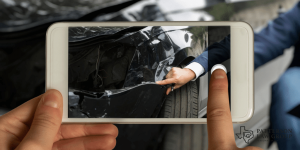
- Take photos or short videos of your vehicle, the damage, skid marks, debris, and the surrounding roadway on Cooper Street, Collins Street, Randol Mill Road, or nearby side streets.
- Photograph traffic signals, stop signs, crosswalk markings, and lane lines that show how the crash occurred.
- Note any details you remember about the fleeing vehicle, including color, type, visible damage, and direction of travel.
- Look around for nearby businesses, homes, or stadium facilities that may have exterior cameras facing the road or parking lots.
- Collect contact information from witnesses who saw the collision or the vehicle leaving the scene.
- If the crash happened near AT&T Stadium or Globe Life Field, identify parking lots, shuttle stops, and rideshare zones that might have additional camera coverage.
Texas Transportation Code provisions, including section 550.021, require drivers involved in injury crashes to stop, remain at the scene, exchange information, and render aid when possible. Your effort to move out of traffic and seek help is consistent with protecting your safety and does not mean you did anything wrong by trying to reach a safer place.
How Do You Request An Arlington Police Crash Report Or TxDOT CR-3?
Your hit-and-run claim will usually involve both an Arlington Police Department report and a TxDOT CR-3 crash report. These documents confirm that the crash occurred, describe basic facts, and record that the other driver left the scene.
You can think of the process in a few clear steps:
- Identify your crash information
- Write down the date, time, and location, such as Cooper Street at a particular cross street or near a known landmark like AT&T Stadium.
- Keep your APD case number or incident number in a safe place.
- Use the APD Public Report Search
- Go to the Arlington Police Department public report search portal.
- Enter your case number, date, and other requested details to locate your report.
- Submit an APD Accident Report Request
- If needed, use the APD accident report request system to order a full copy.
- Follow the instructions for online, mail, or in-person requests, and be prepared to pay a small fee.
- Order the TxDOT CR-3 Through CRIS
- Use TxDOT’s Crash Records Information System to purchase the official CR-3 crash report.
- Search by your name, crash date, county, and other identifiers.
- Save and share your reports
- Keep digital and paper copies of both the APD report and the CR-3.
- Share them with your doctors and your legal team so everyone works from the same facts.
Who Pays After A Hit-And-Run Under Texas Insurance Rules
When a driver runs from the scene, many people worry that they will be left with all the bills. In reality, several types of insurance coverage may still protect you, even if the at-fault driver is never identified. Understanding how these coverages fit together can help you make better decisions and avoid avoidable denials.
How Do UM/UIM, PIP, And Collision Coverage Work After A Hit-And-Run?
Texas policies often include uninsured and underinsured motorist coverage, personal injury protection, and optional collision and medical payments coverage. Each type serves a different purpose, and more than one can apply after a hit-and-run.
Here is a simple way to think about them:
|
Coverage Type |
What It Can Pay |
When It Commonly Applies In A Hit-And-Run |
|
UM/UIM |
Bodily injury damages such as medical bills, lost wages, and pain and suffering |
The at-fault driver has no insurance, too little insurance, or cannot be identified |
|
PIP |
Medical bills and a portion of lost wages, regardless of fault |
You or covered household members are hurt as drivers, passengers, or sometimes pedestrians |
|
MedPay |
Medical bills only, up to the purchased limit |
You want help with medical costs without wage coverage or fault questions |
|
Collision |
Vehicle repair or total loss, minus your deductible |
Your vehicle is damaged, and the at-fault driver cannot or will not pay |
The Texas Department of Insurance provides guidance on how these coverages work and which situations they are designed to handle. An Arlington hit-and-run accident lawyer can help you review your policy declarations and explain which coverages may apply in your specific case.
What Proof Do Insurers Need For A Phantom Vehicle Claim?
A phantom vehicle is a vehicle that causes a crash but leaves the scene before anyone can identify it, and sometimes without direct contact. Texas law and many insurance policies require more than your word alone to support a phantom vehicle uninsured motorist claim.
Traditionally, policies required physical contact between the vehicles, such as paint transfer or visible impact damage, to prevent fraudulent claims. Over time, many insurers and courts have also recognized independent corroboration, which can include witness statements, dashcam footage, nearby surveillance video, or debris patterns that show another vehicle was involved.
A short definition to keep in mind is that a phantom vehicle is an unidentified vehicle that causes a crash and leaves the scene, and a strong phantom vehicle claim is supported by independent evidence such as video, witnesses, or physical damage that confirms the vehicle’s role.
What Happens If The At-Fault Driver Is Never Found?
If law enforcement never identifies the driver who hit you, you may still have a path to recovery through your own UM, UIM, PIP, and collision coverage. Those coverages are designed to step in when the person who caused the crash cannot or does not pay.
A criminal case does not have to be solved for you to pursue a civil injury claim. Your focus in the civil claim is on proving that a hit-and-run occurred, showing how it caused your injuries and losses, and demonstrating that your policy coverages apply.
Texas Hit-And-Run Laws And How They Affect Your Claim
Texas hit-and-run laws set out what drivers must do after a crash and what happens when they fail to stop. These criminal duties are separate from civil compensation rules, but they often influence how fault is evaluated and how insurers and juries view the driver’s conduct.
What Are A Driver’s Duties To Stop, Provide Information, And Render Aid?
Several sections of the Texas Transportation Code describe a driver’s obligations after a crash. For hit-and-run cases, three are especially important:
- Section 550.021
- Applies to crashes involving injury or death.
- Requires a driver to immediately stop at or as close as possible to the scene, return if needed, determine whether someone is involved, and remain until certain duties are fulfilled.
- Section 550.022
- Applies to crashes involving only vehicle or property damage.
- Requires a driver to stop and remain at the scene or return and comply with information sharing duties.
- Section 550.023
- Describes the duty to give information and render aid.
- Requires a driver to provide their name, address, vehicle registration, and insurer details, and to provide reasonable assistance, including arranging or transporting someone for medical care when needed.
Failing to follow these statutes can lead to criminal charges. In civil cases, violations can support arguments that the driver was negligent or that their conduct meets standards often described as negligence per se, where breaking a safety law designed to protect others becomes strong evidence of fault.
How Do Criminal Violations Influence A Civil Injury Claim?
Criminal hit-and-run charges and civil injury claims follow different procedures and have different standards of proof, but they often rely on overlapping facts. When a driver leaves the scene of a crash, that decision can affect several parts of your civil claim.
In practical terms, a driver’s failure to stop and render aid can:
- Strengthen liability arguments by showing disregard for safety rules designed to protect people on the roadway.
- Influence insurer posture, because adjusters know that jurors may view hit-and-run conduct very negatively.
- Affect how juries interpret the driver’s behavior if the case goes to trial, particularly when combined with other unsafe actions like speeding or impaired driving.
Consider an example along the Collins Street and Randol Mill Road corridors near the Entertainment District. A driver hits a pedestrian leaving an event, continues driving without stopping, and is later identified through stadium and traffic camera footage. Even if criminal charges are pending or unresolved, the civil claim can rely on the same evidence to show a violation of stop-and-render-aid duties, along with negligence in speed control, lookout, and right-of-way.

Arlington Roads, Events, And Traffic Patterns Linked To Hit-And-Run Crashes
Hit-and-run crashes in Arlington are not random. They often cluster along certain roads, around specific events, and at locations where roadway design and driver behavior combine to create higher risk. Recognizing these patterns can help explain why your crash occurred and where supporting evidence might be found.
Why Corridors Like Cooper, Collins, Randol Mill, SH-360, And I-30 Matter
High-volume commuter routes and freeway corridors carry fast-moving traffic and heavy daily use. In Arlington, that often means stretches of Cooper Street, Collins Street, Randol Mill Road, State Highway 360, and Interstate 30. These corridors feature on-ramps, frontage roads, and complex intersections where quick decisions and limited visibility can contribute to hit-and-run situations.
Common risk factors along these corridors include the following:
- Conflict zones at on-ramps and off-ramps where merging drivers may misjudge gaps or fail to see slowing vehicles.
- Frontage roads with multiple driveways, business entrances, and short weaving sections that encourage sudden lane changes.
- Poorly lit intersections and mid-block areas where pedestrians, cyclists, or stopped vehicles are harder to see at night.
- Event spillover from the Entertainment District, where drivers unfamiliar with the area may be distracted by signs, crowds, and parking directions.
An extractable way to summarize these risks is that corridors like Cooper Street, Collins Street, Randol Mill Road, SH-360, and I-30 combine higher speeds, complex layouts, and mixed local and visitor traffic, which increases the chances that a driver will make a mistake and leave the scene rather than take responsibility.
What Arlington’s Safe Streets Initiatives Show About Risk
Arlington has launched planning and enforcement efforts to reduce serious crashes, often grouped under Safe Streets or Vision Zero-aligned initiatives such as the Safe Streets Arlington Action Plan. These efforts use data to identify high-injury networks, prioritize improvements, and set collision reduction goals for agencies like the Arlington Police Department.
Arlington’s Safe Streets plan identifies corridors and intersections where people walking, rolling, and driving are more likely to be seriously hurt. It calls for measures such as improved crossings, better lighting, speed management, and targeted enforcement in these areas. For your hit-and-run claim, this context matters because it shows that certain risks were known and that multiple entities share responsibility for improving safety.
When your crash occurs along a corridor flagged in Safe Streets work, your attorney can use that information, along with APD crash maps and TxDOT data, to help explain why your route was dangerous and how better design or enforcement might have reduced the risk.
How An Arlington Hit-And-Run Lawyer Supports Your Claim
Managing a hit-and-run claim on your own can feel overwhelming, especially if you are dealing with injuries, transportation problems, and questions about how to pay for care. An Arlington hit-and-run lawyer can focus on building your case so that you can focus more on recovery.
How Attorneys Gather Video, Witnesses, And Supporting Evidence
A significant part of hit-and-run work involves finding and preserving evidence before it disappears. Your attorney and team can help with steps such as these:
- Mapping the crash area. Identify nearby businesses, stadium facilities, residential neighborhoods, and public cameras that may have captured the crash or the fleeing vehicle.
- Sending preservation letters. Contact property owners, stadium operators, and agencies to ask them to preserve specific time windows of footage.
- Requesting and reviewing footage. Seek voluntary copies where possible, then review video frame by frame to identify vehicles, plate details, and impact mechanics.
- Locating witnesses. Follow up with people listed in APD reports, canvass nearby homes for doorbell camera footage, and contact potential witnesses through reasonable means.
- Coordinating with experts. When appropriate, involve reconstruction experts who can interpret debris patterns, damage, and video to strengthen your claim.
This methodical approach can turn an initially vague hit-and-run report into a much clearer picture of what happened and which coverages apply.
How Lawyers Work With APD, TxDOT, And Medical Providers
Your personal injury attorney also plays a central role in coordinating with agencies and medical providers. That coordination helps ensure that your crash records and medical documentation support each other, rather than leaving gaps that insurers can use to question your claim.
Examples of this work include the following:
- Working with APD and TxDOT
- Securing full copies of APD crash reports, supplements, and available multimedia.
- Ordering TxDOT CR-3 reports, reviewing contributing factor codes, and checking for hit-and-run indicators.
- Collaborating with medical providers
- Obtaining complete records and bills from Medical City Arlington, Texas Health Arlington Memorial, and other clinics and specialists.
- Requesting summaries or narrative letters when needed to explain diagnoses, causation, and long-term impact.
- Building a damages case
- Matching crash timing and mechanics to your reported symptoms and injuries.
- Organizing a demand package that connects APD and TxDOT reports with medical evidence, wage loss documentation, and your daily limitations.
What To Expect From The Hit-And-Run Claims Process
Knowing what comes next can reduce some of the anxiety that follows a hit-and-run crash. While every case is different, most Arlington hit-and-run claims follow a similar structure, from investigation through possible settlement or litigation.
How Long A Texas Hit-And-Run Claim May Take
The length of a hit-and-run claim depends on several factors, including how long your medical treatment lasts, how quickly APD and TxDOT reports become available, and how cooperative insurers are in responding to demands. It often takes time to reach a point where your doctors can describe your long-term outlook with reasonable confidence.
Some claims can resolve within a number of months, while others take longer because of complex injuries, uncertain liability, or disputed coverage. An attorney can help you balance the desire for a faster resolution with the need to fully understand your medical and financial losses.
What Happens If Insurers Dispute Liability Or Coverage
Insurers may dispute whether a hit-and-run occurred, question whether a phantom vehicle really existed, or argue that policy conditions were not met. In other situations, they may accept that a crash occurred but dispute how badly you were hurt or how the crash affected your life.
Common coverage dispute issues include the following:
- UM or UIM carriers denying a claim due to lack of physical contact or insufficient corroborating evidence.
- Insurers claiming that notice was late or that policy deadlines were missed.
- Companies arguing that some of your injuries were preexisting or unrelated.
Your attorney can respond by strengthening the evidence record, pointing to corroborating video and witness statements, and explaining how Texas comparative negligence and insurance rules apply.
What Steps Occur Before A Lawsuit Or Trial
Even when litigation is possible, most hit-and-run claims move through similar pre-suit steps. You can think of the process as a series of stages:
- Collecting crash reports, photos, videos, witness statements, and medical records.
- Preparing a detailed written demand that explains liability, coverages, and damages, supported by documents and evidence.
- Communicating with insurers, evaluating offers, and considering counteroffers.
- Filing a lawsuit in the appropriate court if a fair resolution is not reached, followed by written discovery, depositions, and motion practice.
- Reaching a negotiated settlement at some stage of the process or proceeding to trial when necessary.
At each step, your legal team should keep you informed, answer your questions, and help you understand the consequences of accepting or rejecting settlement offers.
Frequently Asked Questions About Arlington Hit-And-Run Accidents
Can You Recover Compensation If The At-Fault Driver Is Never Found?
Yes, you may still recover compensation even if the driver is never identified. Your own uninsured and underinsured motorist coverage, personal injury protection, and collision coverage can help pay for medical bills, lost wages, and vehicle damage. The key is to show that a hit-and-run occurred, that your policy applies, and that your injuries and losses are well documented.
Do You Need Physical Contact For A UM Claim In Texas?
Many Texas policies historically required physical contact between vehicles to support a hit-and-run uninsured motorist claim, but independent corroborating evidence can also play a role. That means video footage, witness statements, and physical damage can help prove that another vehicle caused the crash even if contact was limited or unclear. Texas Department of Insurance guidance and your specific policy language will influence how these rules apply in your situation.
Who Pays For Vehicle Repairs And Rental Cars After A Hit-And-Run?
If the other driver cannot be identified or has no insurance, your collision coverage usually becomes the primary source for vehicle repairs or a total loss payment, subject to your deductible. Some policies also include rental car coverage or transportation expense reimbursements while your vehicle is being repaired or evaluated. Your attorney can help you review your policy and communicate with the insurer about repair timelines and rental needs.
What If The Other Driver Was Uninsured?
In many ways, an uninsured driver and an unidentified hit-and-run driver create similar problems for injured people. In both situations, you may turn to your own uninsured motorist coverage for injury-related damages and to your collision coverage for vehicle repairs. The difference is that, with an uninsured driver, identity is known and coverage is lacking, while in a hit-and-run the driver may remain unknown. In either case, strong documentation and timely reporting to your insurer are critical.
Free Consultation For Arlington Hit-And-Run Accident Cases
If you were hurt in an Arlington hit-and-run crash, you do not have to navigate the next steps alone. During your first conversation, it helps if you have your APD report number, any TxDOT CR-3 information, scene photos, and basic medical details available, but you can still contact us even if you do not have everything yet.
Your initial consultation is free, and you will have the chance to talk through what happened, how you are feeling, and what options may be available. And remember, you won’t pay anything unless we win.
At Patterson Law Group, we care more about your life than your lawsuit, and we are ready to help you start your journey toward clarity, closure, and financial recovery after a hit-and-run accident in Arlington. Contact us today.