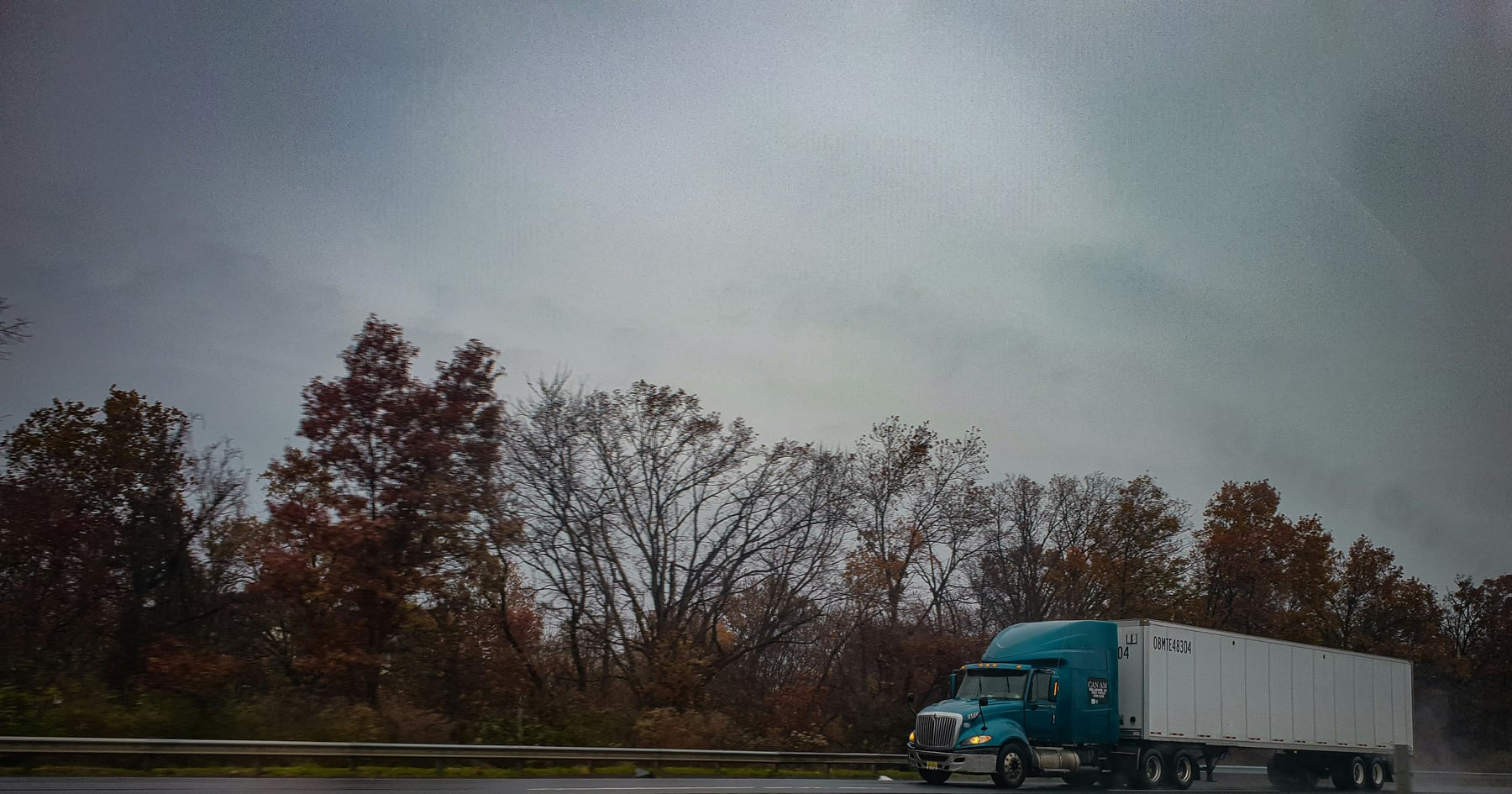
One of the most significant differences between a commercial truck wreck and an ordinary car crash is the scope of potential responsibility. When a passenger vehicle collides with another passenger vehicle, fault usually comes down to one driver. When an 18-wheeler causes a serious crash on the LBJ Freeway, the Stemmons Corridor, or the Mixmaster interchange, responsibility can extend to six or more distinct parties — and failing to identify all of them can mean leaving substantial compensation uncollected.
This page breaks down every party who may bear liability in a Dallas truck accident and explains how Patterson Law Group investigates these cases from the moment we take them on. Patterson Law Group handles truck and 18-wheeler crashes across North Texas every week — not just the occasional case — and we know how liability is contested in Dallas County courts.
Right after a Dallas truck crash, do this
The actions you take immediately after a collision on I-35E, I-635, or any Dallas-area road can directly affect your recovery and your legal claim:
Get emergency medical care — call 911 even if you feel uninjured; some serious injuries are not immediately apparent
Make sure an official crash report is filed; ask the responding officer for the report number
If safe, photograph vehicle positions, skid marks, lane markings, debris field, and any damage to the truck’s cargo area
Get names and contact information for witnesses and the badge numbers of responding officers
Call a truck accident lawyer before speaking with the trucking company’s insurer — early recorded statements are routinely used to limit claims
Injured in a truck crash in Dallas? Call Patterson Law Group at 817-784-2000 or contact us online for a free consultation. There is no fee unless we win.
Who is liable in a Dallas 18-wheeler accident?
The truck driver
The driver is the starting point for any liability analysis. To operate a commercial vehicle legally in Texas, drivers must hold a valid CDL, comply with hours-of-service regulations, and meet ongoing medical certification requirements. When they fall short, they can be held personally liable.
Common driver failures in Dallas truck accident cases include:
Fatigued driving — Violations of FMCSA hours-of-service rules that cap driving time and mandate minimum rest periods
Distracted driving — Cell phone use, GPS interaction, or inattention on busy corridors like US-75 or the Dallas North Tollway
Impaired driving — Alcohol, controlled substances, or prescription medication that impairs judgment or reaction time
Speeding or aggressive driving — Following too closely, unsafe lane changes at highway speed on I-20 or I-30
Failure to inspect — Federal law requires pre-trip and post-trip inspections; skipping them can create liability when a known defect causes a crash
Driver negligence is the most visible element of these cases — but it almost never tells the whole story.
The motor carrier (trucking company)
Under respondeat superior, a company is vicariously liable for its employees’ negligent acts committed in the scope of employment. So if a company driver causes your crash on a Dallas highway while on duty, the carrier’s insurance is directly in play.
Beyond vicarious liability, carriers face direct liability for their own corporate decisions:
Negligent hiring — Placing a driver with prior DWI convictions, a pattern of moving violations, or a disqualifying medical condition behind the wheel
Negligent retention — Keeping a driver employed after documented unsafe behavior rather than retraining or terminating them
Negligent training — Failing to train drivers on braking technique for loaded trailers, defensive driving in dense urban traffic, or cargo securement procedures
Negligent supervision — Ignoring ELD data or driver logs that show hours-of-service violations
Negligent entrustment — Assigning a vehicle to a driver known to be unqualified to operate it safely
In many serious Dallas truck accident cases, the carrier’s management decisions are as central to the case as the driver’s conduct on the day of the crash.
The cargo loading company or shipper
Not every carrier loads its own freight. When third-party shippers or loading contractors are involved, federal regulations under 49 CFR Part 393 impose strict requirements for cargo securement, weight distribution, and load limits. A load that is overweight, improperly balanced, or inadequately secured can trigger a tire blowout, rollover, or jackknife on a Dallas interstate. If shifting cargo contributed to your crash, the loading company or shipper may share liability alongside the driver and carrier.
The truck or parts manufacturer
Commercial trucks are complex machines. When a crash is caused or worsened by a component failure — defective brakes, a faulty tire, a malfunctioning steering unit, a failed fifth-wheel coupling — the manufacturer of that component may be liable under Texas products liability law. Physical evidence from the truck must be preserved immediately; once a vehicle is repaired, returned to service, or destroyed, the evidence is gone.
Third-party maintenance contractors
Some carriers outsource vehicle maintenance to outside shops. When a contractor performs a negligent inspection, misses a safety-critical defect, or performs a repair incorrectly, they can share liability for any crash that follows. Maintenance logs, repair orders, and parts invoices all become critical records in cases involving mechanical failure.
Freight brokers
In some cases, a freight broker who arranged the load may also share responsibility — particularly if the broker knowingly connected a shipper with a carrier that had a history of safety violations or lacked required insurance. Broker liability is an evolving area of trucking law, but it is worth investigating whenever a broker was involved in the chain.
Why pursuing every liable party matters
Commercial truck accidents routinely involve multiple insurance policies: the driver’s personal coverage, the carrier’s primary liability policy, an umbrella policy, cargo insurance, and manufacturer products liability coverage. Identifying and naming every responsible party is the only way to access the full scope of available coverage. Leave a party out, and that insurance may never be touched.
Hurt in a Dallas 18-wheeler crash? Call Patterson Law Group at 817-784-2000 or reach us online. Free consultation. No fee unless we win.
How we investigate liability in Dallas truck accident cases
At Patterson Law Group, our liability investigation starts the same day we take a case. We routinely:
Send spoliation and preservation demands to all potentially liable parties, placing them on legal notice to retain evidence
Obtain the driver’s complete qualification file, CDL history, drug testing records, and employment history
Secure ELD data, ECM/black box records, and all maintenance logs before they can be overwritten or destroyed
Subpoena dispatch records and load-planning communications for evidence of scheduling pressure
Analyze cargo loading records, weight tickets, and bill-of-lading documents
Inspect the truck and failed components with qualified engineering experts
Pull the carrier’s FMCSA Safety Measurement System record to identify prior violations
We know how Dallas County juries evaluate truck accident cases. We build our cases accordingly.
Ready to talk to a Dallas truck accident lawyer? Call Patterson Law Group at 817-784-2000 or contact us online. There is no fee unless we win.
Frequently asked questions
Can I sue the trucking company directly, even if the driver was at fault? Yes. When the driver was a company employee acting within the scope of employment, you can pursue the carrier directly under respondeat superior. Both the driver and the company can be named as defendants in the same lawsuit.
What if the truck driver was classified as an independent contractor? Carriers sometimes use independent contractor classifications to try to limit their exposure. Texas courts look past the label to the substance of the working relationship — including how much control the carrier exercised over the driver’s routes, schedules, and equipment. In many cases the carrier can be held liable regardless of how the driver was classified on paper.
What if several parties all share fault? Texas law allows you to pursue all responsible parties in a single action. A jury can apportion fault percentages among multiple defendants. Under Texas’s modified comparative fault rule, you can recover as long as your own share of fault does not exceed 50 percent — but your recovery is reduced proportionally. Identifying every liable party at the outset is essential to preventing any responsible defendant from escaping accountability.
How long do I have to file a Dallas truck accident lawsuit? Texas law generally gives you two years from the date of the crash to file a personal injury lawsuit. See . Do not wait — evidence disappears and witnesses’ memories fade well before that deadline.
Talk to a Dallas truck accident lawyer today
Figuring out who is liable in a commercial truck accident is complex, and the carrier’s legal team begins building its defense immediately after the crash. You need an attorney doing the same on your side.
Patterson Law Group offers free consultations for truck accident victims throughout Dallas and the DFW metro. Call 817-784-2000 or contact us online. There is no fee unless we win.
Related: | |
For more information, visit our main Dallas Truck Accident Lawyer page.