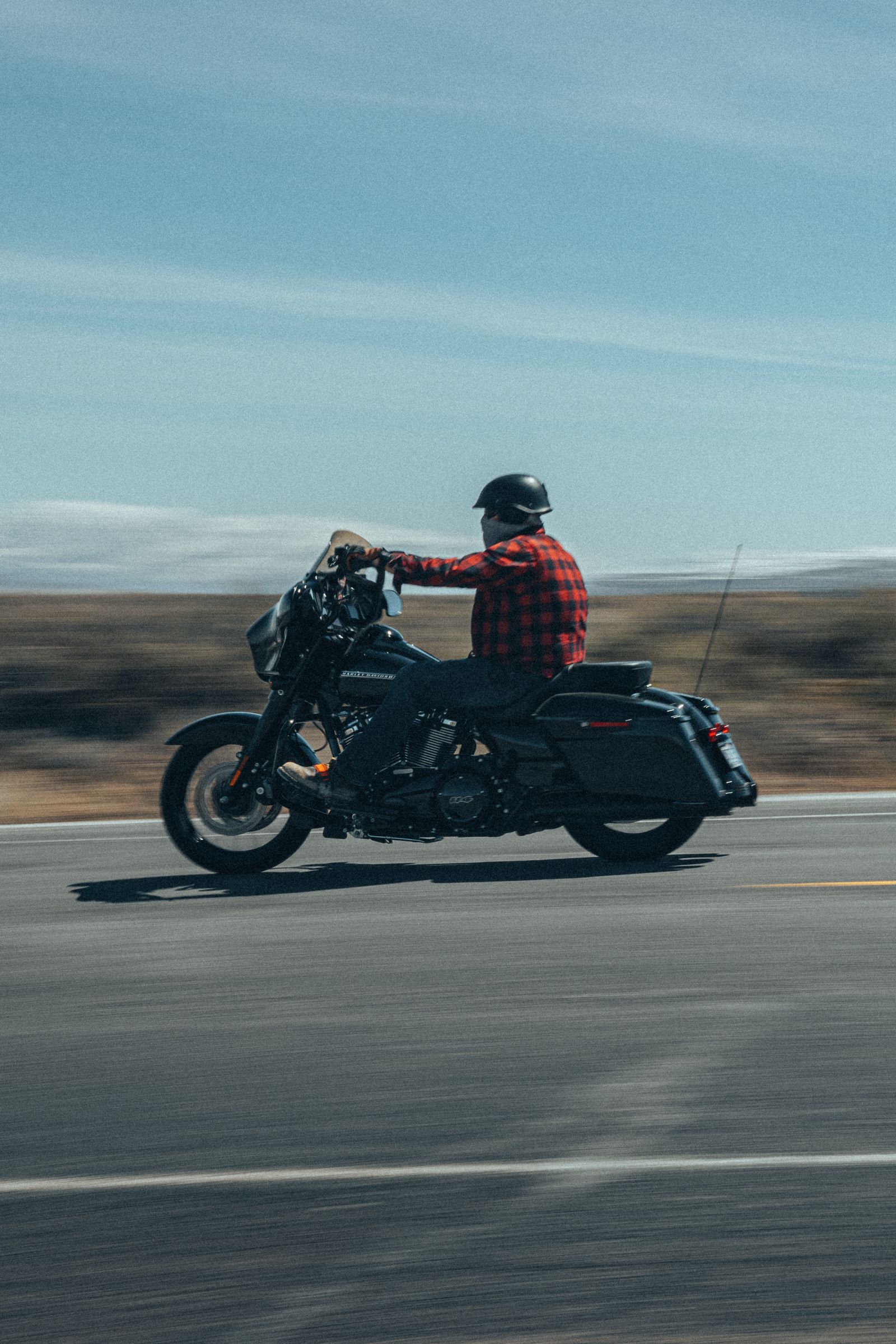
Ask ten Texas riders whether they have to wear a helmet and you’ll get ten different answers. Some think it’s always required. Some think the law was repealed years ago. Both are wrong, and the confusion matters — because after a wreck, the insurance company will use whatever you don’t know against you. Here’s what Texas law actually says about helmets, and how that choice can follow you into an injury claim.
What the Law Requires
Texas requires the operator and any passenger on a motorcycle to wear a helmet. That’s the default rule under Section 661.003 of the Texas Transportation Code, and for anyone under 21 it is absolute — riders and passengers under 21 must wear a helmet, no exceptions.
Where it gets misunderstood is the exception for adults. A rider or passenger who is at least 21 years old may lawfully ride without a helmet if they either completed an approved motorcycle operator training and safety course, or are covered by a health insurance plan that provides medical benefits for injuries suffered in a motorcycle collision. Meet one of those two conditions and going helmetless is legal.
You’ll see a lot of articles put a number on that insurance requirement — usually “at least $10,000 in medical coverage.” That figure is a practical benchmark the industry uses, not something written into the statute. Section 661.003 itself doesn’t set a dollar amount. If you’re relying on the insurance option to ride without a helmet, the safer read is simply to carry real medical coverage for motorcycle injuries and not assume a specific minimum makes you bulletproof.
The Police Can’t Pull You Over Just to Check
One part of the law protects riders in a way most people don’t realize. A peace officer may not stop or detain a motorcyclist for the sole purpose of checking whether they completed the safety course or carry the qualifying insurance. In other words, being helmetless is not, by itself, a reason for a traffic stop. An officer needs some other lawful basis to pull you over. This has been settled Texas law for years and remains in force.
How Your Helmet Affects an Injury Claim
This is where riders get burned, and where the law is more nuanced than either side likes to admit. Wearing or not wearing a helmet is not the same question as who caused the crash. A driver who turns left across your path is just as at fault whether you had a helmet on or not. Helmet use has nothing to do with fault for the collision itself.
Where it can come in is on the injuries. Texas has no statute that either bans or guarantees helmet evidence in a civil case. Instead, admissibility is decided under the ordinary rules of evidence and the state’s proportionate responsibility system. Not wearing a helmet is not automatically negligence, and it is not an automatic bar to recovery. Texas courts treat it much the way they now treat seat-belt evidence: after the Texas Supreme Court allowed evidence of pre-occurrence, injury-causing conduct like failing to buckle up, defense lawyers have argued the same logic should apply to helmets.
The key is proof. For helmet non-use to reduce what you recover, the defense generally has to put on competent evidence — usually expert testimony — showing that riding without a helmet actually made your specific injuries worse. It isn’t enough to wave at the fact that you weren’t wearing one. Without that causal link, the evidence is often kept out as more prejudicial than useful. And crucially, it only ever goes to the head and neck injuries a helmet could have affected; it says nothing about a shattered leg or a crushed pelvis.
None of this is one-size-fits-all. Whether helmet evidence gets in, and how much weight it carries, is highly fact-specific and depends heavily on the judge and the medical proof in your particular case. That’s exactly why you don’t want to concede the point to an adjuster on the phone.
Why the Percentage Is Everything
The reason insurers push the helmet issue so hard comes down to how Texas splits up fault. Under Section 33.001 of the Civil Practice and Remedies Code, fault is assigned as a percentage. If you are found to bear more than 50 percent of the responsibility, you recover nothing. If you’re at 50 percent or less, you can still recover, but your damages are cut by your share of the blame — 20 percent at fault means you collect 80 percent of your damages.
Every percentage point the insurer can pin on you is money out of your pocket, and if they can push you past the halfway mark, they owe zero. Helmet arguments are one of the tools they use to move that number. It isn’t personal. It’s arithmetic — and it’s why the choices you make right after a crash, including what you say and sign, matter so much.
One More Thing Riders Get Told Wrong
You may have heard about recent changes to Texas motorcycle law. In 2025 the Legislature added an “inherent risk” framework for off-road motorcycle facilities — the kind of protection that applies to tracks and off-highway riding areas. It did not change the on-road helmet requirement, the adult exemption, or any of the rules about helmet evidence in an injury case. The helmet law you ride under today is the same one that’s been on the books.
Talk to a Lawyer Before You Talk to the Adjuster
If you were hurt in a motorcycle wreck, the insurance company is already building the case that some of it was your fault — and the helmet question is one of the first places they’ll dig. You don’t have to answer it alone. Our Fort Worth motorcycle accident lawyers know exactly how these arguments get made and how to shut them down before they cost you. The call is free, and you owe us nothing unless we win.