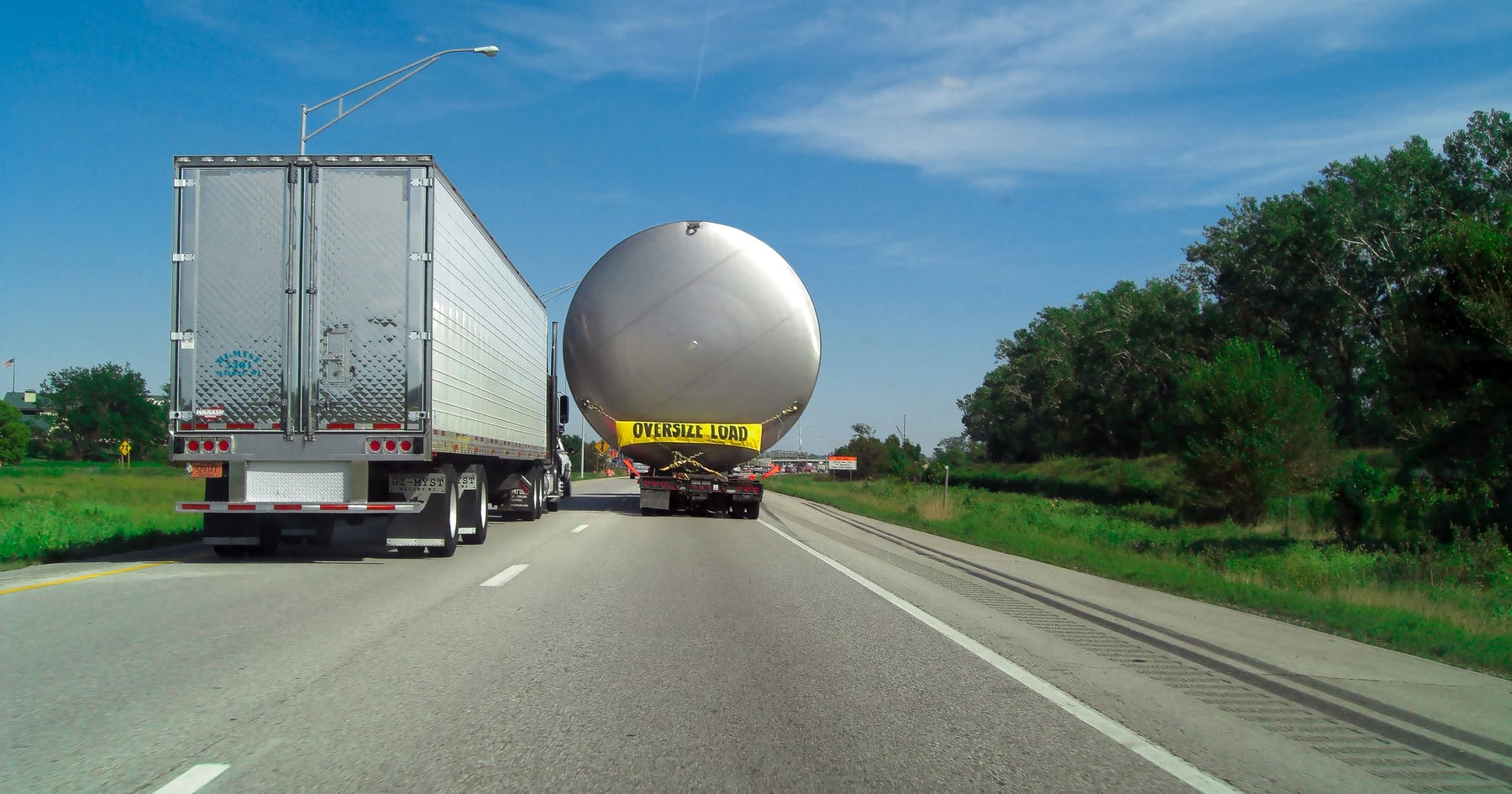
Federal and state law set strict weight limits on commercial trucks because the physics of an overloaded truck create genuine danger for every vehicle sharing the road. Extended stopping distances, elevated blowout risk, and compromised handling are documented, measurable consequences of carrying too much weight. When a trucking company or cargo operator exceeds those limits to move more freight in fewer loads, and someone gets hurt, the responsibility for that choice extends to the people who made it.
Federal weight limits for commercial trucks
The Federal Motor Carrier Safety Regulations set maximum weight standards: 80,000 pounds gross vehicle weight; 20,000 pounds per single axle; 34,000 pounds per tandem axle; and bridge formula limits tied to axle spacing. Trucks that exceed these thresholds — whether through excess total weight or uneven weight distribution across axles — are operating both illegally and unsafely.
How overloading affects truck safety
Braking distance increases dramatically. On I-35E south of downtown Dallas or approaching a merge zone on the Stemmons Corridor, an overloaded truck that brakes suddenly may be physically incapable of stopping in time. Tire failure risk rises sharply. When weight exceeds tire ratings, internal heat builds faster and blowout risk increases. A blowout at speed on I-635 (LBJ) or I-20 can cause immediate loss of control. Handling and stability are degraded. Overloaded trucks are harder to steer and far more prone to rollover during emergency lane changes, banked curves, and sharp maneuvers. Brake wear accelerates. Consistent overloading degrades brake components beyond their design tolerances, increasing brake failure risk.
Improper load distribution
A truck that stays within total weight limits can still create hazardous conditions if weight is not distributed correctly. An improperly distributed load can cause the trailer to fishtail through curves or during lane changes on I-20 and I-30, trigger a jackknife when braking pushes the trailer forward unevenly, create rollover risk when a side-heavy load shifts the center of gravity, and result in cargo spills when improperly secured freight breaks loose. Responsibility for load distribution extends to the loading company, the shipper, and in some circumstances the driver.
Right after a Dallas overloaded truck crash, do this
Get emergency medical care immediately. Call 911 so a police report is generated. Photograph the cargo area and load distribution if visible — capture any shifted, unsecured, or spilled freight before the scene is cleared. Get witness names and contact information. Call a truck accident lawyer before speaking with the trucking company or cargo company’s insurer — weigh records and cargo documentation can disappear or be altered quickly.
Injured in a Dallas truck accident involving an overloaded vehicle? Call Patterson Law Group at 817-784-2000 for a free consultation. There is no fee unless we win.
Who is liable in an overloaded truck accident in Dallas?
The cargo loading company or shipper — for loading a trailer beyond legal limits, distributing weight improperly, or misrepresenting load weights on required documentation. The trucking company — for accepting an overweight load, dispatching without verifying weight, or pressuring drivers to carry excess freight. The truck driver — for failing to conduct a pre-trip inspection that would have flagged a visibly overweight or imbalanced load. The freight broker or intermediary — if a broker arranged an overweight shipment with knowledge of the excess.
How we investigate overloaded truck cases
At Patterson Law Group, our investigation typically includes: obtaining weigh station records and pre-trip inspection reports to document the truck’s actual weight at dispatch; securing bills of lading, weight tickets, and load manifests; requesting dispatch records and internal communications for evidence that the carrier or shipper knew the load was over the limit; working with accident reconstruction and trucking industry experts; and reviewing the carrier’s FMCSA safety record for prior weight violations.
Frequently asked questions
How can I find out if the truck that hit me was overloaded? Weigh station records, pre-trip inspection reports, and cargo documentation can establish whether the truck exceeded legal limits. This evidence is obtained through our investigation and, when necessary, through formal legal discovery.
What if the driver didn’t know the truck was overloaded? A driver conducting a proper pre-trip inspection should identify a load that is visibly overweight or unbalanced. Even if the driver was genuinely unaware, the loading company and carrier may still bear full liability.
Talk to a Dallas truck accident lawyer today
When a trucking company or cargo operator puts an overloaded truck on Dallas highways, they are making a calculated choice to put other people at risk. Patterson Law Group holds them accountable for that choice. Call us at 817-784-2000 or contact us online. Free consultation. No fee unless we win.
For more information, visit our main Dallas Truck Accident Lawyer page.