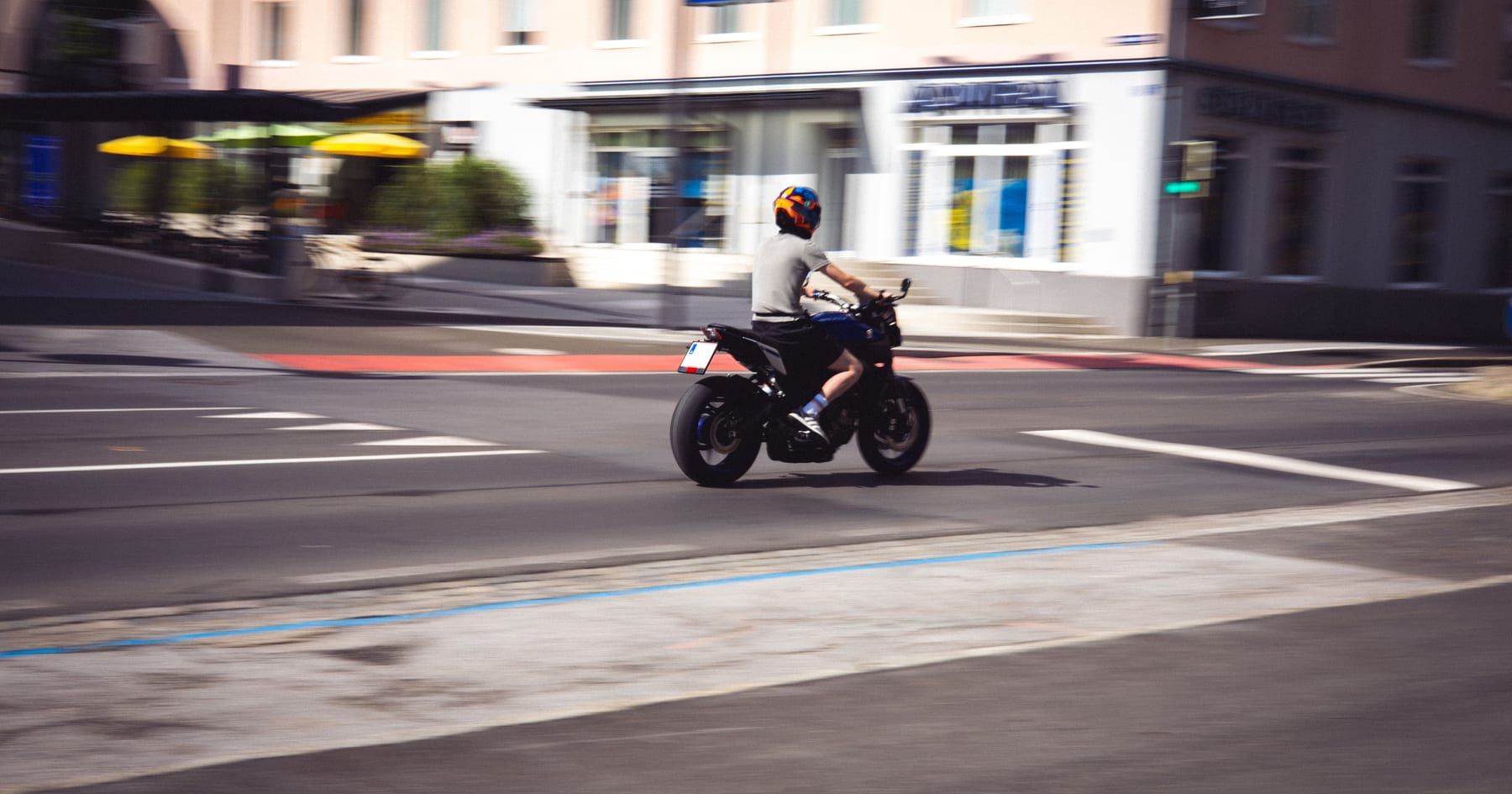
A driver waits to turn left, sees what looks like a gap, and goes. A motorcycle coming the other way is already there. It is one of the most common ways riders get hurt, and in most of these crashes Texas law puts the fault on the turning driver.
It happens constantly. In 2022, there were 3,268 fatal two-vehicle crashes in the U.S. between a motorcycle and another vehicle. In 44% of them, the other vehicle was turning left while the motorcycle was going straight, passing, or overtaking (NHTSA).
What Texas Law Says About Left Turns
Texas Transportation Code §545.152 is short and clear. A driver turning left at an intersection, or into an alley, private road, or driveway, must yield the right-of-way to any vehicle coming from the opposite direction that is in the intersection or close enough to it to be an immediate hazard.
A motorcycle is a vehicle under that rule. If the rider was close enough that the turn put them in danger, the turning driver had a duty to wait.
Why Drivers Miss Motorcycles
A motorcycle has a narrow profile, and its speed and distance are hard to judge from a car. That is why TxDOT runs its “Look Twice” campaign every spring. In 2025, 559 motorcyclists were killed on Texas roads (TxDOT 2025 Crash Facts), and 37% of motorcycle deaths happen at roadway intersections (TxDOT).
“I didn’t see him” is the most common thing a turning driver says. It is not a defense. Texas law requires drivers to look, and to wait when a vehicle is close.
When the Rider Can Share Fault
The turning driver is not automatically 100% at fault. The insurance company will look hard at the rider: speeding, splitting lanes (illegal in Texas), running a yellow or red light, riding without a headlight on, or riding impaired.
Texas uses proportionate responsibility (Civil Practice and Remedies Code, Chapter 33). If a jury finds the rider partly at fault, the recovery is reduced by that percentage. If the rider is found more than 50% at fault, the rider recovers nothing. That line is why insurers fight so hard over fault in these cases.
Helmets come up too. Texas requires riders under 21 to wear one. Riders 21 and older can ride without one if they have completed an approved safety course or carry health insurance that covers motorcycle crash injuries. Even when no helmet was required, an insurer may argue the injuries would have been less severe with one.
Evidence That Proves the Turning Driver Was at Fault
These cases are won with evidence collected early:
- The Texas crash report (CR-3), its diagram, and the officer’s contributing factors
- Dashcam, helmet camera, traffic camera, and nearby business video, which is often deleted within days
- Witness statements, especially from drivers who were behind the motorcycle
- Damage to both vehicles, which shows the angle of impact and who was where
- Data from the car’s event data recorder, which can show speed and whether the brakes were applied in the seconds before impact
- Scene photos, skid marks, and, in serious cases, a crash reconstruction
What to Do After a Left-Turn Crash
- Get medical care, even if you feel able to ride home.
- Call police so there is a crash report.
- Photograph the scene, both vehicles, and your gear.
- Keep your helmet, jacket, and other gear as they are. They are evidence.
- Do not give a recorded statement to the other driver’s insurance company.
- Talk to a lawyer before the evidence disappears. In most cases Texas gives you two years to file suit, but video and witnesses are gone long before that.
If you were hurt by a driver who turned in front of you, our Fort Worth motorcycle accident lawyers can review your case for free.
This post is general information, not legal advice.