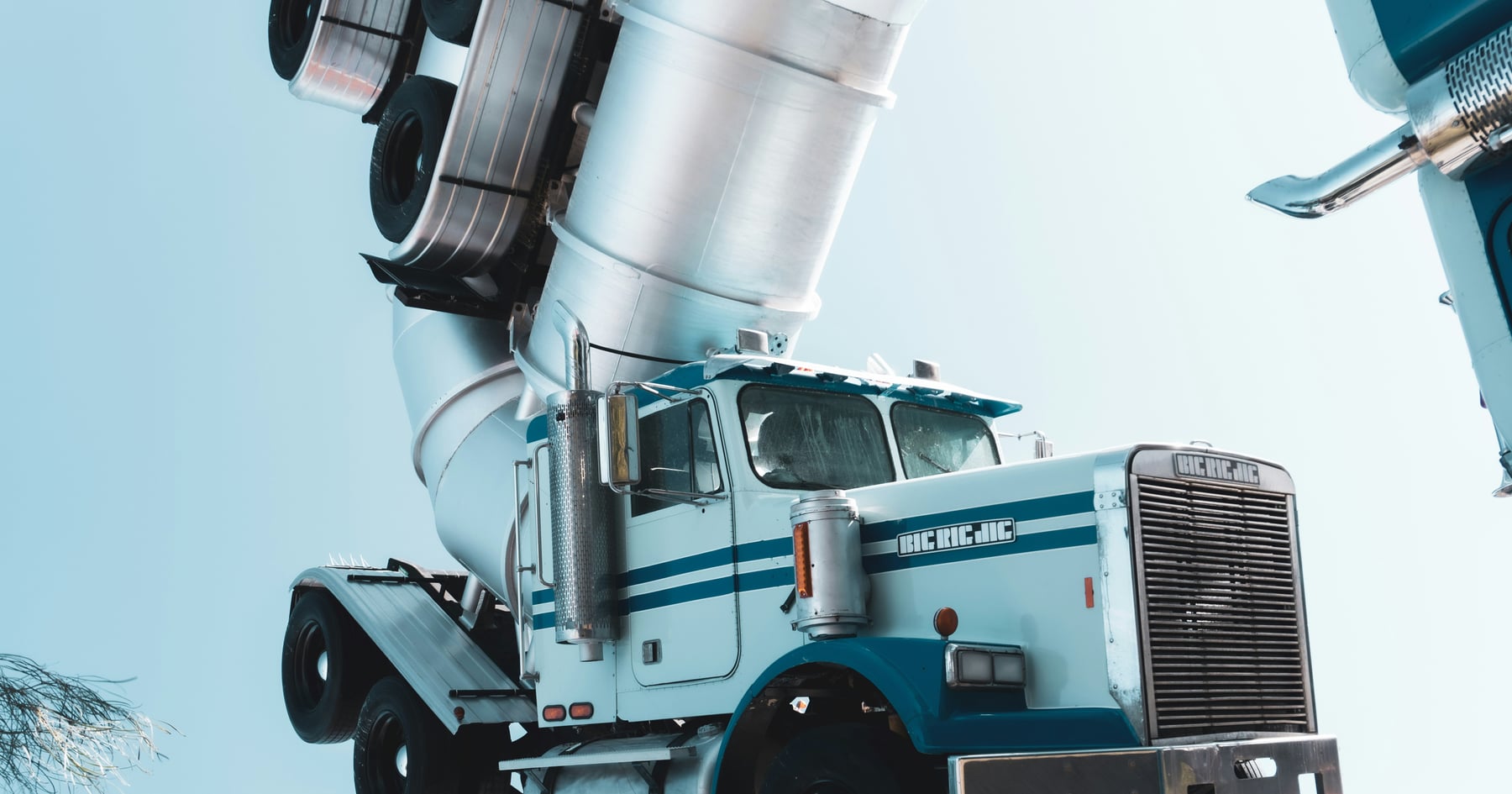
A jackknife accident occurs when the cab and trailer of a tractor-trailer fold toward each other at the coupling, forming a sharp angle — like a pocketknife snapping closed. On a Fort Worth freeway, the swinging trailer can cross two or more lanes in an instant, leaving other drivers with no time to react. These crashes rank among the most catastrophic in any truck accident category, and Fort Worth’s busy interstate corridors and active construction zones see them more often than most people realize.
How jackknife accidents happen
Jackknifing begins when the trailer loses traction and starts to rotate outward relative to the cab. The most common causes include: Improper braking — Hard panic stops lock the cab wheels but leave the trailer pushing forward. Excessive speed — A truck traveling too fast cannot stop in time for slowed traffic or sudden hazards. Slippery conditions — Fort Worth’s winter ice events and sudden spring storms strip traction from trailer tires quickly. Uneven or overweight cargo — A trailer loaded off-balance raises the probability that any abrupt braking or steering input produces a jackknife. Equipment failure — Defective brakes, a blown trailer tire, or a compromised coupling system can trigger or worsen a jackknife. Late overcorrection — A driver who spots a hazard too late makes a sharp steering input that sends the trailer swinging.
Right after a Fort Worth jackknife crash, do this
Get emergency medical care — call 911 and accept on-scene treatment. Make sure there is an official crash report. Document the scene photographically — especially the trailer’s angle relative to the cab, the skid marks showing where the trailer began to swing, the debris field, and the damage to all vehicles. Gather witness information. Contact a truck accident lawyer before speaking with the trucking company’s insurer — jackknife cases are aggressively defended, and the carrier’s team mobilizes quickly.
Hurt in a Fort Worth jackknife truck accident? Call Patterson Law Group at 817-784-2000 for a free consultation. There is no fee unless we win.
Where jackknife accidents happen most in Fort Worth
I-35W construction zones — Ongoing expansion creates repeated forced-braking situations. Speed limit drops, sudden lane narrowing, and unpredictable traffic backing are precisely the conditions that expose poor braking technique. I-30 west into downtown Fort Worth — The approach includes curves and grade changes that amplify forces on the trailer under hard braking. Loop 820 entry and exit ramps — Ramp geometry creates merge situations where trucks must brake or steer sharply. US-287 north corridor — High-speed freight traffic means that when a jackknife happens here, it occurs at speeds where the trailer can travel a significant distance before stopping.
Who is liable in a Fort Worth jackknife truck accident?
The truck driver — for improper braking, excessive speed, distraction, or failing to adapt to road and weather conditions. The trucking company — for inadequate training, failure to maintain braking systems, or delivery schedules that effectively force drivers to speed. The cargo loading company — if off-center or overweight cargo contributed to trailer instability. The truck or brake manufacturer — if a defective braking system or coupling equipment failed. A maintenance contractor — if negligent brake inspection or repair left the system unable to perform.
Because jackknife crashes almost always involve multiple contributing factors, a thorough investigation is essential to finding every party whose conduct played a role.
The evidence that matters in a Fort Worth jackknife case
Establishing causation requires preserving and analyzing specific evidence promptly: ELD and black box data (speed, braking force, and steering inputs in the seconds immediately preceding the jackknife); brake inspection and maintenance records; cargo weight and loading documentation; driver training and qualification records; weather and road condition data; and accident reconstruction analysis. At Patterson Law Group, the first action we take after accepting a jackknife case is sending spoliation letters demanding that all evidence be preserved before it is overwritten or destroyed.
Frequently asked questions
How do I know whether the jackknife was caused by driver error or equipment failure? In many cases, both contributed. ELD and black box data establish what the driver did in the seconds before the crash. Mechanical inspection of the braking and coupling systems reveals whether equipment failure played a role. We work with reconstruction specialists and engineering experts to establish the complete picture.
What if I had no chance to avoid the trailer when it swung into my lane? If you had no reasonable opportunity to avoid the collision, Texas’s modified comparative fault rules should not reduce your recovery. A driver with no warning and no escape route typically bears no fault for the crash.
What if wet roads or ice contributed to the jackknife? Adverse conditions do not relieve the driver or company of liability. Commercial drivers are required to adjust speed and braking technique to actual road conditions — including rain and ice on I-35W in February. A driver who fails to adapt is negligent, even if the road was slippery.
Talk to a Fort Worth truck accident lawyer today
If you were hurt when a tractor-trailer jackknifed on I-35W, Loop 820, I-30 west, or anywhere else in Tarrant County, the investigation needs to begin before the evidence disappears. Call Patterson Law Group at 817-784-2000 or contact us online. Free consultation. No fee unless we win.
For more information, visit our main Fort Worth Truck Accident Lawyer page.