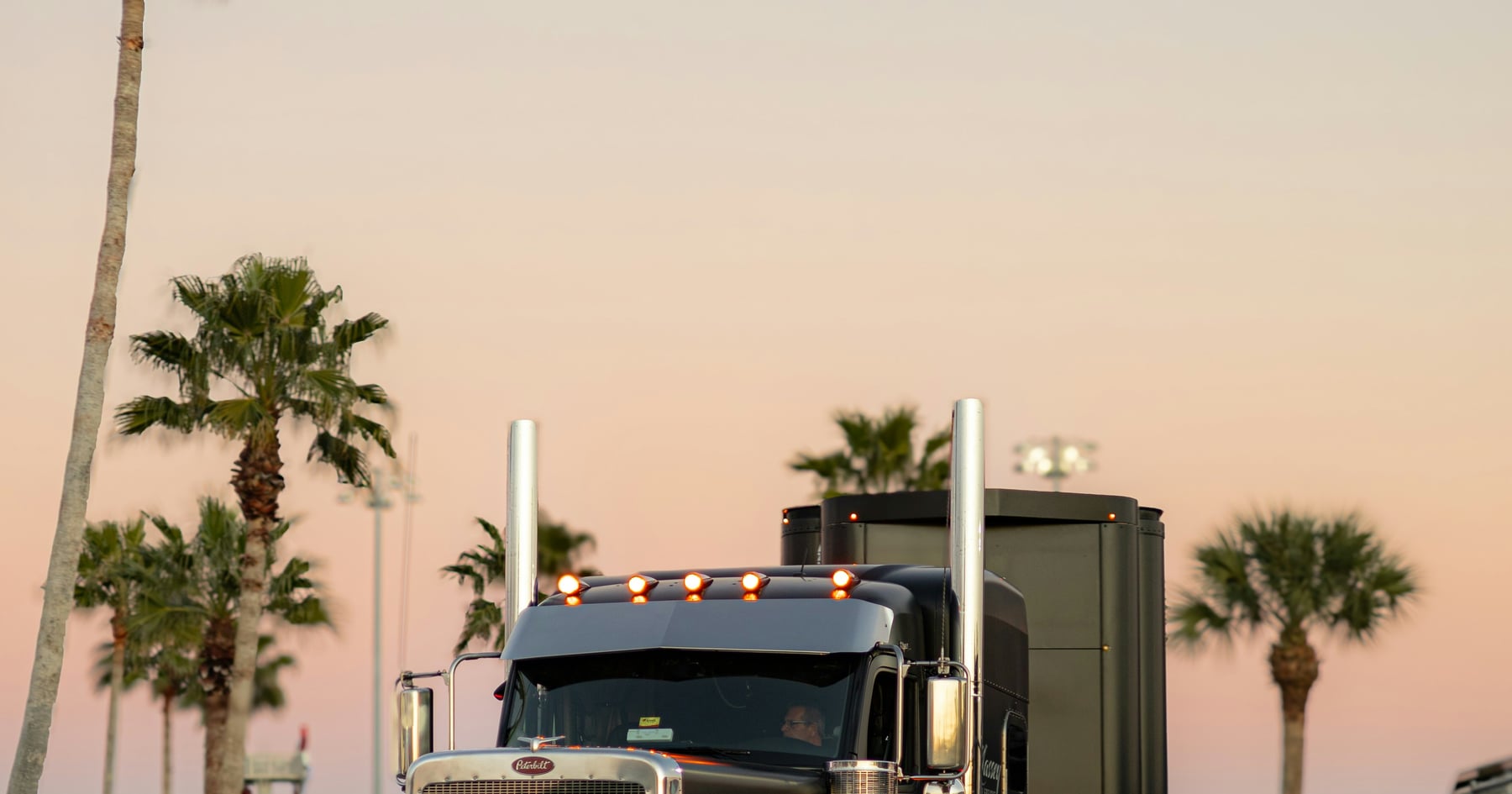
Every commercial truck has large blind spots — zones around the vehicle where the driver simply cannot see other traffic, even with correctly adjusted mirrors. On Dallas’s densest freight corridors — the I-635 LBJ Freeway, the Stemmons Corridor, the Mixmaster interchange, and US-75 Central Expressway — passenger cars and 18-wheelers share lanes at highway speeds with very little margin for error. When a truck driver changes lanes, merges, or swings through a turn without accounting for a vehicle in one of those blind zones, the consequences can be devastating.
If you were injured in a blind spot truck accident in Dallas or anywhere in the surrounding metro, you may have a strong legal claim — even if the truck driver insists they never saw you. The law does not excuse a driver simply because they failed to look. It requires them to look carefully and take every reasonable precaution before any maneuver.
Where are the blind spots on an 18-wheeler?
Commercial trucks have four primary blind zones that truck drivers are professionally obligated to account for before every move:
Directly behind the trailer — A zone extending roughly 30 feet behind the trailer’s rear where vehicles are completely invisible in the mirrors.
Directly in front of the cab — Approximately 20 feet ahead of the hood, where the elevated cab height blocks the driver’s view of vehicles stopped or moving slowly.
The right side — The largest and most dangerous blind zone, running diagonally from the cab across two full lanes on the passenger side. This is where the majority of blind spot crashes occur.
The left side — A smaller but real blind zone extending roughly one lane to the left of the cab, alongside the driver’s door.
How blind spot truck accidents happen on Dallas roads
Lane changes on I-635 (LBJ Freeway) — The LBJ’s high-speed, multi-lane configuration means trucks are frequently shifting lanes under pressure. A driver who checks mirrors quickly rather than carefully can miss a vehicle already alongside the trailer in the right blind zone.
Merging at Stemmons and the Mixmaster — The I-35E/I-30 Mixmaster forces trucks and passenger cars through complex weave zones. Trucks merging from connector ramps regularly fail to clear the right blind zone before completing the merge.
US-75 Central Expressway interchanges — Tight on-ramp geometry at US-75 interchanges leaves less room for a merging truck to see vehicles in the target lane.
Wide right turns at downtown Dallas intersections — A truck swinging wide to complete a right turn can pin a car in the curb lane that the driver never detected in the right-side blind zone.
What truck drivers are legally required to do
The Federal Motor Carrier Safety Administration requires commercial drivers to use mirrors correctly, signal before lane changes, and scan blind zones before maneuvering. A driver who changes lanes without mirror checks, turns without scanning adjacent lanes, or backs without a spotter may be violating both federal safety regulations and basic negligence standards. Those violations are direct evidence that the driver failed the professional standard of care expected of someone operating an 80,000-pound vehicle.
Who is liable in a Dallas blind spot truck accident?
The truck driver — for failing to check mirrors, signal properly, or account for vehicles in the blind zones before maneuvering. The trucking company — for inadequate blind spot training, deferred maintenance on safety technology, or scheduling pressure that encourages rushed maneuvers. The truck or equipment manufacturer — if a mirror system, camera, or proximity sensor was defectively designed or malfunctioned at the critical moment.
Comparative fault and why it matters in Dallas courts
Trucking insurers routinely argue that a driver in a truck’s blind spot was partly at fault. Under Texas’s modified comparative fault system, if a jury assigns you any percentage of fault, your damages are reduced by that percentage. If your share exceeds 50 percent, recovery is barred entirely. But a driver legally traveling in their lane has every right to be there — the obligation to clear blind zones rests with the truck driver. Dallas County juries understand that distinction, and an experienced attorney can push back hard against comparative fault arguments.
How we investigate blind spot truck accident cases
Proving that a driver failed to check a blind zone requires concrete evidence. At Patterson Law Group, we build that case by sending immediate preservation demands for ELD and black box data, requesting onboard camera footage and blind spot monitoring logs, inspecting the truck’s mirrors and safety technology, interviewing eyewitnesses, and working with accident reconstruction specialists to establish precisely where both vehicles were at the moment of impact.
Frequently asked questions
Does being in the truck’s blind spot mean I can’t recover compensation? Not automatically. Texas’s modified comparative fault rule allows you to recover as long as your share of fault does not exceed 50 percent. Traveling legally in your lane is your right — the driver’s obligation to check before maneuvering does not disappear just because you were in the blind zone.
What if there are no witnesses? Physical evidence usually tells a cleaner story than either party’s account. The point of impact, the direction of crash forces, skid marks, and ELD data can all reconstruct what happened independent of what anyone says.
How fast does evidence disappear? ELD and black box data can be overwritten within days without a preservation demand. Surveillance footage from businesses along I-635 or US-75 is typically deleted within 30 to 60 days. The sooner you contact an attorney, the better the odds of capturing everything.
Talk to a Dallas truck accident lawyer today
If a truck changed lanes or turned without seeing you on I-635, Stemmons, or anywhere else in the Dallas metro, you have rights — and the evidence needed to protect them has a short shelf life. Call Patterson Law Group at 817-784-2000 or contact us online. Free consultation. No fee unless we win.
For more information, visit our main Dallas Truck Accident Lawyer page.