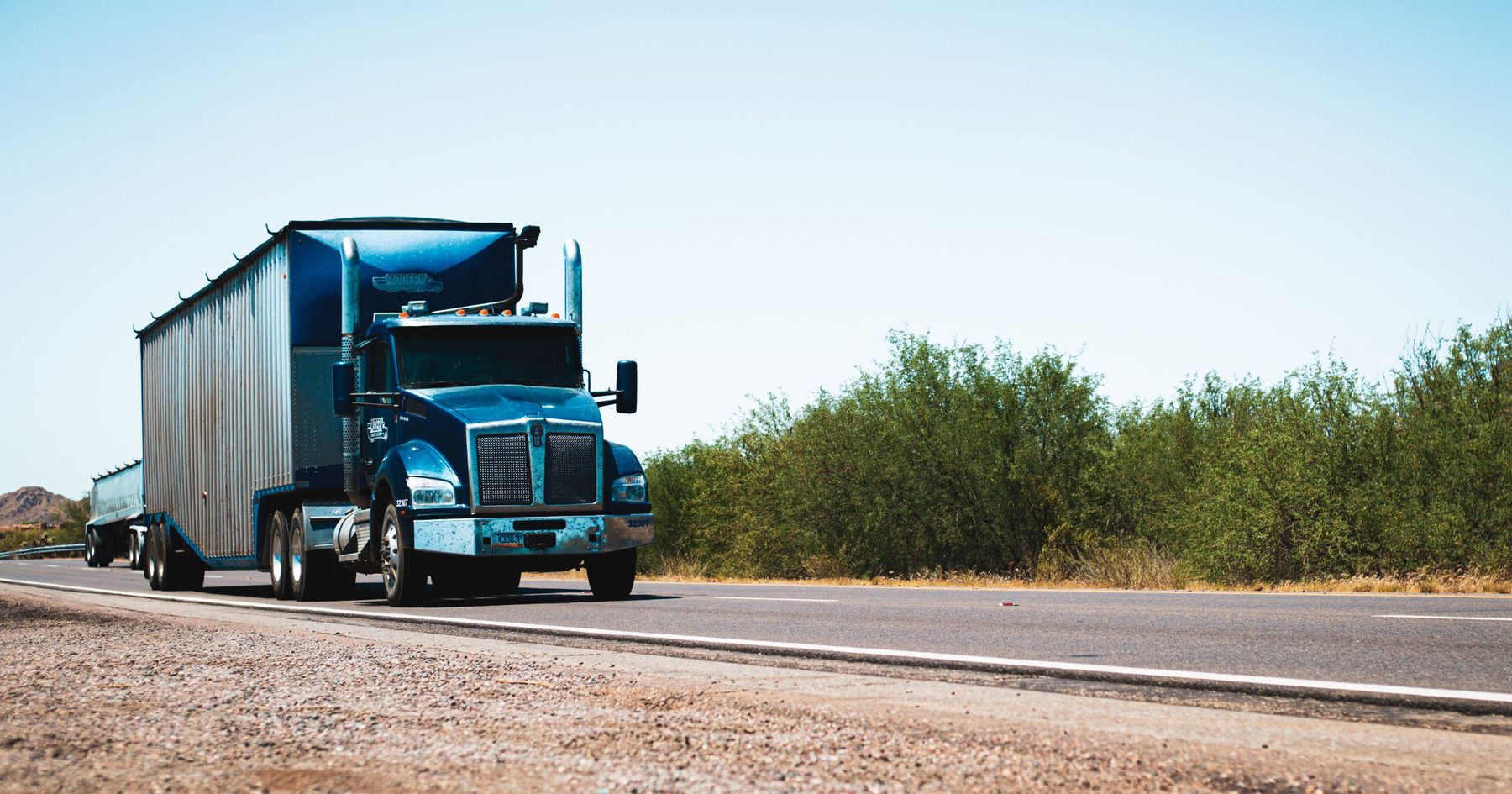
The first question we get from almost every family after an 18-wheeler crash is some version of “how much insurance does the truck have?” It is the right question. In a car wreck, the other driver’s policy is usually the whole ballgame. In a truck wreck, the trucking company’s policy is only the first layer, and the number printed on it was set by Congress more than 40 years ago. Here is what the law actually requires, why that number runs out fast in a serious crash, and where the rest of the money comes from.
How much liability insurance does an 18-wheeler have to carry?
For most 18-wheelers hauling ordinary freight across state lines, federal law requires a minimum of $750,000 in liability coverage. The rule is in the Federal Motor Carrier Safety Administration’s regulations at 49 CFR Part 387, and it applies to for-hire carriers operating vehicles with a gross vehicle weight rating of 10,001 pounds or more in interstate commerce.
The minimum goes up with the cargo, not the size of the truck:
$750,000 for general freight. This is the number that covers the vast majority of tractor-trailers you pass on I-35W, I-20, and I-30.
$1,000,000 for oil and certain hazardous materials.
$5,000,000 for the most dangerous hazardous cargo, including certain explosives, poison gases, and radioactive materials.
Trucks that stay inside Texas and never cross a state line are regulated by the Texas Department of Motor Vehicles instead. Texas sets its own intrastate minimums in 43 Texas Administrative Code Section 218.82: $500,000 for commercial vehicles with a gross vehicle weight rating of 26,001 pounds or more, and $300,000 for vehicles rated at 26,000 pounds or less, with hazardous materials haulers held to the applicable federal figure. An 18-wheeler running from a Fort Worth distribution center to a store in Abilene can legally be carrying $500,000, not $750,000.
Compare that to what Texas requires of a passenger car: $30,000 per injured person, $60,000 per crash, and $25,000 in property damage under Transportation Code Section 601.072. A truck’s minimum is 25 times higher than a car’s, and it still is not close to enough in a bad wreck.
Why has the $750,000 minimum not changed since 1985?
Congress created the requirement in the Motor Carrier Act of 1980. The general freight minimum phased in at $500,000 and reached $750,000 on January 1, 1985. It has not been raised since. It is not indexed to inflation, and repeated efforts to increase it have stalled: FMCSA opened a rulemaking in 2014 to study higher minimums and withdrew it in 2017 for lack of data, and the House version of the 2021 infrastructure bill would have raised the floor to $2 million with inflation adjustments, but that provision was dropped before the bill became law.
In January 2026, FMCSA’s own report to Congress laid out how far behind the number has fallen. Adjusted for general inflation from 1985 through 2024, $750,000 would be roughly $2.2 million. Adjusted for medical cost inflation, which is what actually drives a catastrophic injury claim, it would be about $3.7 million. The same report cited an outside analysis finding that the median “nuclear verdict” against corporate defendants, across all industries, reached $51 million in 2024. A trucking company meeting the legal minimum is insured for less than 2 percent of that.
The trucking industry has fought every increase on the ground that higher premiums would put small carriers out of business. Whatever you think of that argument, the practical result for an injured person is the same: the truck that hit you may be legally insured and still badly underinsured.
Why does $750,000 run out so fast in a serious 18-wheeler crash?
Because a loaded 18-wheeler weighs up to 80,000 pounds and a passenger car weighs about 4,000, the injuries in a truck crash are not the injuries in a fender bender. In the cases we handle out of Tarrant County, the numbers stack up like this:
An emergency helicopter flight to a Fort Worth trauma center and the first week in the ICU can run into six figures before anyone has talked about surgery. A spinal fusion, a traumatic brain injury workup, or a multi-week hospital stay adds more. Then the costs that go on for years: rehabilitation, follow-up surgeries, home modifications, and attendant care. Then the wages the person will never earn, which for a 35-year-old with a working career ahead of them can by itself exceed the policy.
And if more than one person was hurt, the $750,000 is shared. Most trucking policies are written as a combined single limit per occurrence, meaning one crash with three injured people in one car does not triple the coverage. It splits it.
That is the math that makes the policy limit the starting point of the case rather than the end of it.
What is the MCS-90 endorsement and why does it matter?
Every interstate motor carrier’s liability policy has to carry an endorsement called the MCS-90, required by 49 CFR 387.15. It is a promise from the insurer to the public, not just to the trucking company: if a final judgment is entered against the carrier for negligent operation of the truck, the insurer will pay it up to the federal minimum even if the policy would otherwise exclude the claim, including because the truck was not listed on the policy or was operating outside its authorized territory.
That matters because trucking policies are full of exclusions. Unscheduled vehicles, out-of-territory hauls, and other coverage defenses are all reasons an insurer might try to deny a claim. The MCS-90 takes that option away for the first $750,000. The insurer may go after the trucking company to get reimbursed for anything it paid only because of the endorsement, but that is between them. The injured person gets paid.
The endorsement does not raise the coverage above the minimum, and it is a backstop, not a first-dollar policy. But in a case where the insurer’s first move is to look for a technicality, it is often the reason the minimum gets paid at all.
Where does the rest of the money come from when the truck’s policy is not enough?
This is where an 18-wheeler case separates from a car wreck, and where the investigation in the first few weeks decides what the family ultimately recovers. The sources we look for, in rough order:
Excess and umbrella policies. Most carriers of any size buy coverage well above the federal minimum, often $1 million to $5 million in primary coverage with excess layers on top. Large national fleets can carry tens of millions. The trucking company will not volunteer this. Texas discovery rules let us force it into the open once suit is filed, and we ask for every layer.
The trailer owner and the cargo owner. The tractor and the trailer are frequently owned by different companies, and the shipper who loaded the cargo may be a third. Each can have its own policy and its own share of the fault, especially in a load-shift or overweight case.
The freight broker. For years, brokers argued that federal law shielded them from negligent hiring claims. On May 14, 2026, the U.S. Supreme Court unanimously held in Montgomery v. Caribe Transport II that the federal safety exception preserves a state-law negligent hiring claim against a broker when the claim concerns motor vehicles, which is exactly the claim a family brings when a broker put an unsafe carrier on the road. We covered what that means for Texas families here. In a case with a minimally insured carrier, the broker’s policy can be the largest available.
Your own underinsured motorist coverage. If your auto policy includes UM/UIM coverage, it pays the gap between what the truck’s insurers pay and what your damages are worth, up to your limit. Under Texas Insurance Code Section 1952.101, this coverage is part of every Texas auto policy unless a named insured rejected it in writing, so check your declarations page. It is the one source of recovery that does not depend on what the trucking company bought.
The trucking company’s own assets. When a carrier is grossly negligent, for example by putting a driver with a known drug history or a falsified logbook behind the wheel, Texas law allows exemplary damages on top of the compensatory award. Many liability policies exclude those damages, so the carrier’s own balance sheet may be what answers for them. Larger carriers have that balance sheet. Smaller ones sometimes do not, which is exactly why the layers above matter.
How do you find out how much insurance the trucking company actually has?
Before a lawsuit is filed, not much forces the answer. No Texas statute requires a trucking company to hand over its policy limits to an injured person who has not sued. The company’s public FMCSA registration will show that the required minimum is on file and name the insurer, and that is about all a public search will tell you.
Once suit is filed, the picture changes. Texas Rule of Civil Procedure 194.2 requires the defendant to disclose, within 30 days of answering and without being asked, any insurance or indemnity agreement that may be used to satisfy a judgment. That is when the excess layers show up. You have two years from the crash to file under Texas Civil Practice and Remedies Code Section 16.003, but the evidence that proves the case does not wait that long.
The trap for families who wait is that the trucking company’s insurer knows all of this on day one. Their adjuster may call within 48 hours with sympathy and a check that is small next to the real coverage, and a release attached to it. Signing that release ends the claim against every layer above it.
What should you do after an 18-wheeler crash in Fort Worth?
Get medical care first and do not skip follow-up appointments. Then, before you speak to anyone from the trucking company or its insurer, talk to a Fort Worth 18-wheeler accident lawyer who handles commercial truck cases specifically. The reason is not a sales pitch. It is that the evidence that proves fault and the coverage that pays for it both have to be locked down in the first weeks, through a preservation letter to the carrier for the truck’s electronic data, driver logs, and dispatch records, and through early identification of every company and policy in the chain.
For a plain-language walkthrough of how the claim itself unfolds once those pieces are in place, see our guide to truck accident insurance claims in Fort Worth.
If you or someone in your family was hit by an 18-wheeler in Fort Worth, Arlington, or anywhere in North Texas, call Patterson Law Group at (817) 784-2000 or contact us online. The consultation is free, and we do not get paid unless you do.